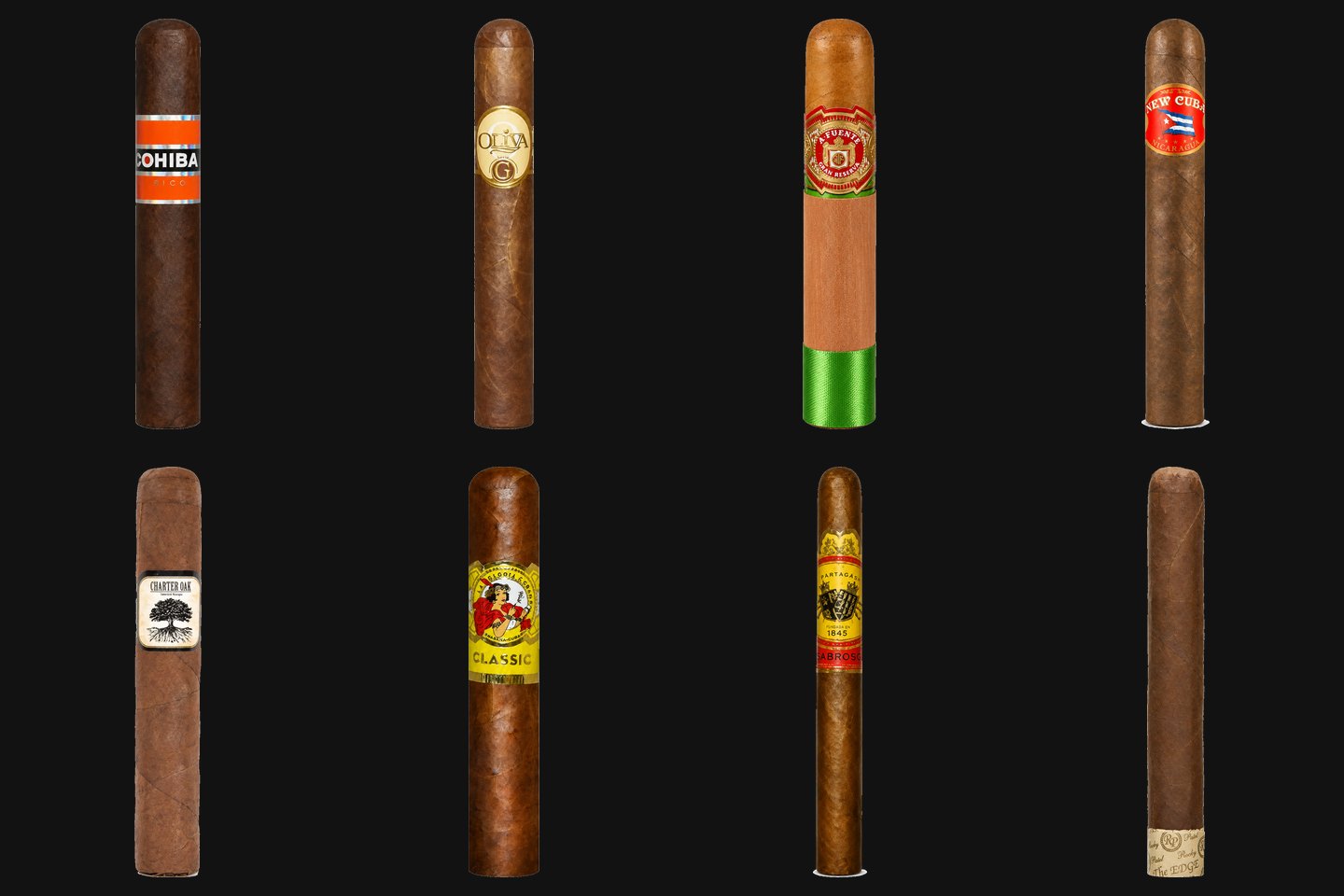
A useful cigar price comparison starts with the exact product. A price attached to a brand name leaves too much unresolved. You need the line, size, wrapper version where relevant, and number of cigars in the offer before deciding whether two prices describe the same thing.
For our 2026 value competition, the published limit is $9 MSRP or less for the exact vitola, or cigar format. The 2026 Value Cigar of the Year is Cohiba Rubicon Box-Pressed Robusto. The size is part of the winner’s identity, and the competition’s MSRP limit should not be read as a promise about every retailer’s checkout price.
Match the line and size first
Start by writing down the complete cigar name. Then check the measurements. A Robusto and a Toro from the same line are different products, so comparing their prices without noting their sizes can create a misleading impression of the discount.
Cigar dimensions are commonly shown as length and ring gauge. In a 6 × 52 listing, six is the length in inches and 52 is the diameter in sixty-fourths of an inch. Names such as Robusto and Toro describe general formats; exact measurements can vary. The Ashologist cigar size guide explains how to read them.
Calculate the price per cigar
Package totals can disguise the comparison. Divide the listed package price by the number of cigars, then account for any additional charges that apply to that purchase.
For a hypothetical example, a five-pack priced at $40 works out to $8 per cigar. A box of 20 priced at $150 works out to $7.50 per cigar. The box has the lower unit price, but it also requires $110 more upfront. These figures are examples, not current offers or prices for a named brand.
The lower unit price is useful information. It does not settle whether you want that quantity. If you have never tried the exact cigar, the smaller purchase may be the more sensible way to learn whether you like it.
Separate the reference price from the amount you pay
MSRP means manufacturer’s suggested retail price. Keep that reference separate from a promotional price, a single-cigar shelf price, or the total on a receipt. A meaningful comparison uses the same basis on both sides.
For your personal notes, record the amount you actually paid and the quantity received. If one offer includes additional charges and another has not shown them yet, the comparison is unfinished. Also note the date so an old receipt does not become an assumed current price.
Choose a format that suits the occasion
Size can influence the duration and character of the experience. A larger cigar is not automatically a better value simply because it contains more tobacco. Think about whether its format suits the time you have and what you enjoy.
Ask a retailer about the specific size you are considering. If the attraction is mainly the discount, pause long enough to check that the cigar itself is a good match. A modest saving matters less when the purchase leaves you with a quantity you do not want.
Record value alongside performance
Keep the exact cigar name, price paid, and a brief note about the experience together. Over time, those records give you a personal basis for comparing choices. Price tells you the cost; your observations explain whether the purchase was worthwhile.
Use our Official Value Field to explore the specific cigars selected for the 2026 competition. Check the complete name on each profile before comparing it with a shop listing, and keep the value championship distinct from the separate Cigar of the Year competition.